
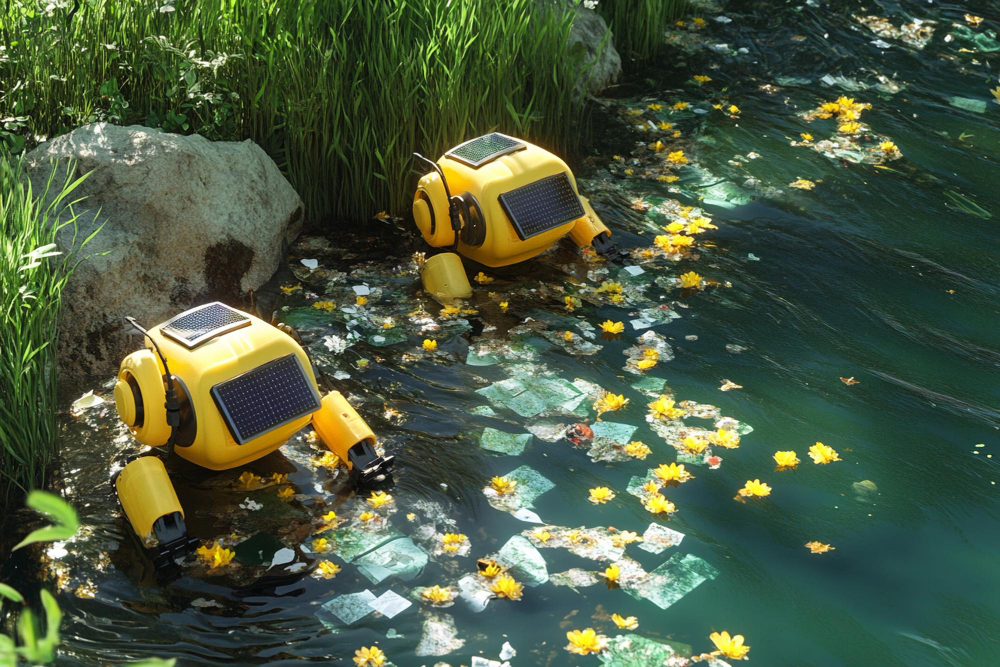
River Clean-Up Robots Begin Removing Microplastics Near Industrial Zones
Environmental engineers have launched a new fleet of autonomous river clean-up robots designed to remove microplastics from waterways, particularly in areas near industrial zones where plastic particle concentrations are highest. Early pilot tests show promising reductions in surface-level microplastic density, marking a potential breakthrough in freshwater restoration technologies.
Targeting a Growing Environmental Challenge
Microplastics—tiny fragments of plastic less than 5 millimeters in size—are increasingly found in rivers, lakes, and oceans. These particles often originate from industrial runoff, wastewater systems, and the breakdown of larger plastic items.
Because microplastics are difficult to capture with traditional filtration systems, engineers developed small, self-navigating robots capable of skimming the water surface and collecting particles before they disperse downstream.
How the Clean-Up Robots Work
Each robot is equipped with:
- Fine filtration membranes capable of capturing particles as small as a few microns
- Environmental sensors to detect areas with high plastic concentrations
- Autonomous navigation software that allows the robots to move along pre-mapped routes
- Floating collection chambers that store filtered debris
- Solar panels for extended operation between charges
As robots travel across the water, they draw in surface water, filter out microplastics, and release clean water back into the river.
Promising Results From Initial Tests
Pilot programs near industrial zones showed measurable improvements in water quality after just a few weeks of operation. Researchers observed:
- Significant reductions in surface microplastic density
- Improved clarity in monitored river sections
- Stable operation even in areas with strong currents
- Minimal disruption to aquatic life
The robots also detected previously unmonitored hotspots of plastic pollution, helping researchers better understand how microplastics travel through river systems.
Supporting Freshwater Ecosystems
Microplastic contamination can disrupt freshwater ecosystems, affecting fish, insects, and plant life. By removing these particles early—before they break down further or enter larger waterways—the robots help protect:
- Aquatic food chains
- Drinking water sources
- Wetlands and riparian habitats
- Coastal regions downstream
Environmental teams emphasize that prevention remains essential, but cleanup technologies like these play a valuable role in restoring affected waterways.
Scalable, Low-Impact Design
One of the most appealing aspects of the robots is their scalability. They are:
- Small and lightweight
- Easy to deploy in large numbers
- Able to operate in narrow or shallow waterways
- Designed for minimal maintenance
Because they rely on solar power, energy consumption is low, making them suitable for long-term environmental monitoring and cleanup operations.
Future Enhancements and Expansion Plans
Engineers plan to expand the program to additional rivers and industrial corridors. Upcoming improvements may include:
- Enhanced filtration membranes to capture even smaller particles
- AI-powered route optimization for faster cleanup
- Underwater sensors to detect microplastics below the surface
- Integration with drone-based monitoring systems
Several municipalities are already evaluating how the robots could fit into broader watershed restoration efforts.
A New Tool in the Fight Against Plastic Pollution
While eliminating microplastics at the source remains the most effective long-term strategy, autonomous cleanup robots offer a practical, targeted solution for reducing existing pollution. By capturing these particles before they spread, the technology helps protect freshwater ecosystems and supports cleaner waterways for communities downstream.
As development continues, autonomous river robots may become an essential tool in global efforts to address plastic waste.


